333 to 332 BCE
Cyprus Joins Alexander the Great
After Alexander defeats Persia at Issus, the Cypriot kings switch sides and send about 120 warships to help him besiege Tyre in 332 BCE.
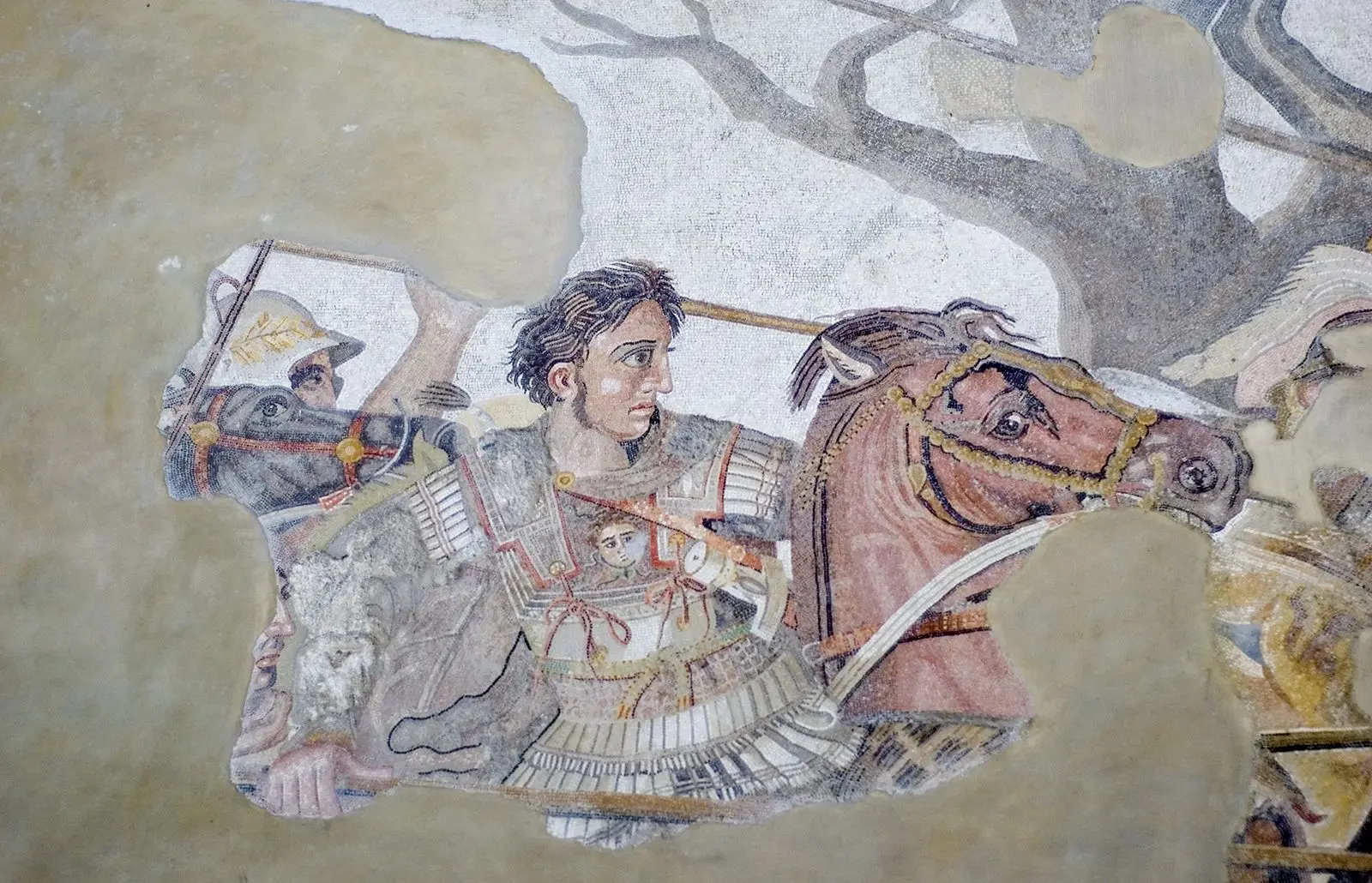
For two centuries the Cypriot kingdoms had served the Persian Empire, and their ships formed part of the Persian fleet. When Alexander of Macedon crossed into Asia in 334 BCE, Cypriot crews were still sailing for Persia, and at first the island’s kings had every reason to stay loyal.
That changed late in 333 BCE, when Alexander defeated the Persian king Darius III at Issus, in what is now southern Turkey. Alexander then marched south along the Levantine coast and took control of the Phoenician cities. Cut off from Persia and facing the new power on the mainland, the Cypriot kings changed sides. According to the Roman era historian Arrian, they sailed into Sidon with about 120 ships, at roughly the same time as some 80 Phoenician ships also came over.
Their arrival was decisive for Alexander’s next task. The island city of Tyre had refused to admit him, and he could not take it without control of the sea. With the Cypriot and Phoenician squadrons he suddenly had a fleet of over 200 ships. Arrian says Alexander pardoned both groups for their earlier service to Persia, judging that they had joined the Persian fleet out of necessity rather than choice. He ordered the Cypriots, under the admiral Andromachus, to anchor off the northern harbour of Tyre, while the Phoenicians took the southern one. Pnytagoras, king of Salamis, commanded one wing of the fleet alongside Alexander’s general Craterus. Tyre fell in 332 BCE after a siege of about six or seven months.
This was not a conquest in the usual sense. The kings came over of their own accord and kept their thrones, as they had under Persia, and the island was never again under Persian rule. Greek culture, already strong in most of the kingdoms, now sat inside a much larger Greek speaking world. When Alexander died in 323 BCE, though, his generals began fighting over his empire, and Cyprus, with its harbours and copper, was too valuable for any of them to ignore.