649 CE
First Arab Raids
A new Arab fleet under Muawiya sacks Constantia, opening three centuries in which Cyprus was raided and its revenues shared by Byzantium and the Caliphate.
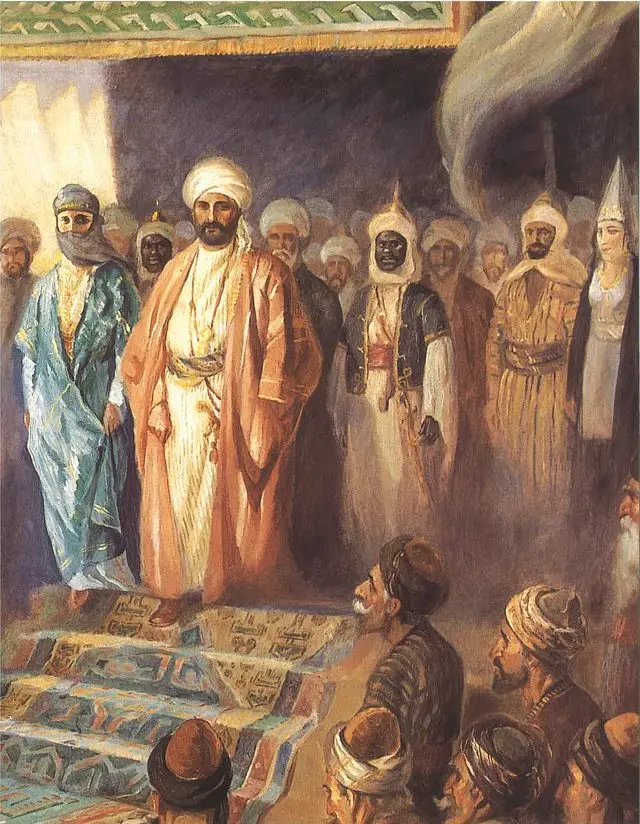
In the 640s the Arab armies that had taken Syria and Egypt from Byzantium faced a new problem. Byzantine fleets could still strike their coasts at will, as they showed by briefly retaking Alexandria in 646. Muawiya ibn Abi Sufyan, governor of Syria and later the first Umayyad caliph, argued for a navy of their own. Shipwrights from Egypt and the Levant spent around three years building it, and Cyprus, a short sail from the Syrian coast, was its first target.
The fleet sailed in the spring of 649, although some accounts date the first attack to 647. It met little resistance. The capital, Constantia (Salamis), was taken and plundered, and the attackers withdrew with their loot as a Byzantine relief force approached. Cypriots were made to pay an annual tribute, recorded in later sources as about 7,200 gold coins.
Islamic tradition holds that Umm Haram, an elderly woman honoured as a companion of the Prophet Muhammad, took part in the expedition, fell from her mule near Larnaca and died there. Her reputed tomb, Hala Sultan Tekke, on the shore of the Larnaca Salt Lake, is one of the most revered Muslim shrines on the island. The present buildings date from the late eighteenth and early nineteenth centuries.
A second, larger expedition under Abu al-Awar followed in the early 650s, reportedly with 500 ships and 12,000 troops. Constantia was sacked again and Lapithos was captured. This time a garrison stayed, until it was withdrawn under Caliph Yazid I around 680 as too costly. Many people from Constantia moved to nearby Arsinoe, the settlement that grew into Famagusta (Ammochostos, Gazimağusa).
In 688 Emperor Justinian II and Caliph Abd al-Malik agreed to share the island’s tax revenues. For almost three hundred years Cyprus sat between the two powers, paying both, sometimes left in peace and sometimes raided or forcibly resettled. Historians still debate how formal this arrangement was, but it lasted until the Byzantine reconquest of 965.