1 April 1955
EOKA Campaign Begins
EOKA, an underground group led by George Grivas, sets off bombs across Cyprus, starting an armed campaign to end British rule and unite with Greece.
After the Second World War the demand for union with Greece, enosis, returned to the centre of Greek Cypriot politics. In a referendum organised by the Church in January 1950, around 96 per cent of Greek Cypriots who took part voted in favour. Britain, which planned to move its Middle East headquarters to Cyprus, refused to discuss a change of sovereignty.
George Grivas arrived secretly in Cyprus in early November 1954 and built an underground network he called the National Organisation of Cypriot Fighters, EOKA. Just after midnight on 1 April 1955 his groups set off around 18 bombs across the island. Targets included the Cyprus Broadcasting Station transmitter and government and military buildings in Nicosia, Famagusta, Larnaca and Limassol. Grivas announced the campaign in a leaflet signed with his code name, Dighenis.
Archbishop Makarios III, the political leader of the Greek Cypriots, shared EOKA’s goal and knew Grivas, but the extent of his role in the violence is disputed and he later denied any part in it. The two men disagreed at first over whether to limit the campaign to sabotage.
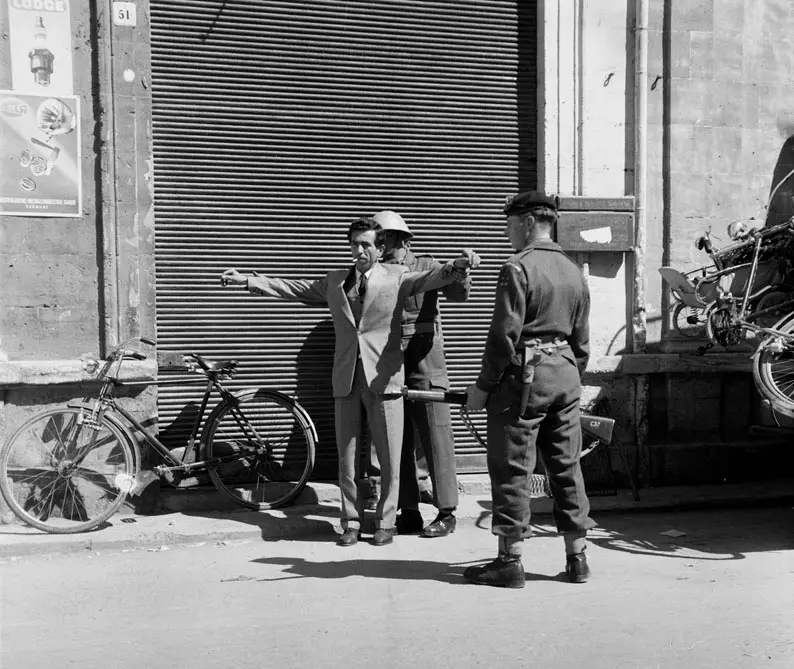
The campaign grew into ambushes, bombings and killings. The new Governor, Field Marshal Sir John Harding, declared a state of emergency on 26 November 1955, banning public meetings and introducing the death penalty for carrying weapons. EOKA attacked British soldiers and police, and also killed Greek Cypriots it regarded as collaborators or opponents. According to figures compiled by the historian Heinz Richter, 104 British servicemen, 54 police officers and 238 civilians were killed during the emergency, 203 of the civilians Greek Cypriots. Several EOKA members were hanged by the British, and others died in clashes or detention.
To fill the police ranks Britain relied on about 4,000 Turkish Cypriot policemen, which drew them into the front line and worsened relations between the two communities. The emergency ended in 1959 with the Zurich and London Agreements, which created an independent republic and ruled out both union with Greece and partition.