1291
Fall of Acre: Cyprus Becomes the Crusader Base
The Mamluk capture of Acre ends the crusader states on the mainland. Refugees, merchants and military orders move to Cyprus, and Famagusta booms.
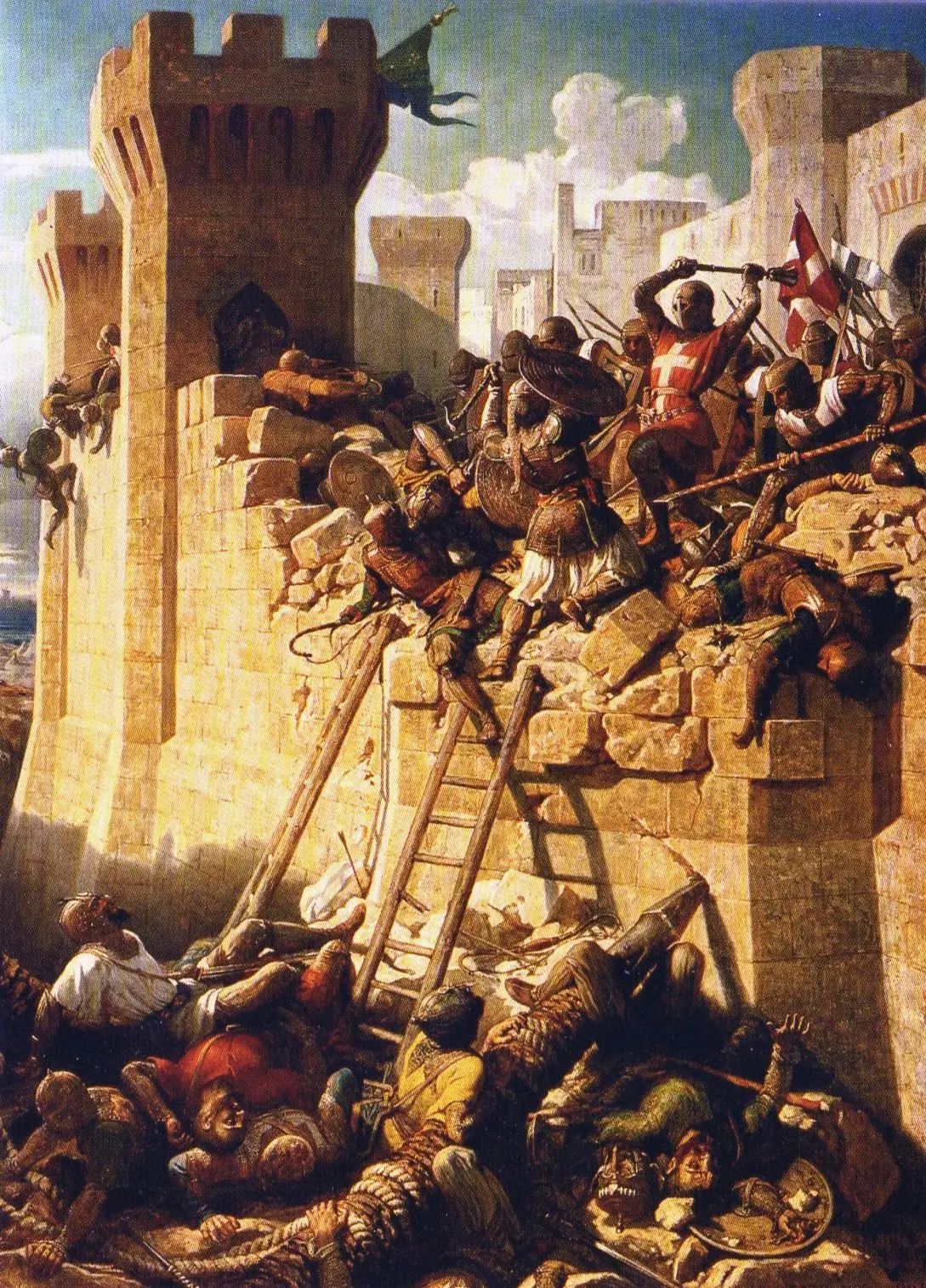
For a century after the Lusignans took Cyprus, the island’s fortunes were tied to the crusader states on the Syrian and Palestinian coast. Its kings held lands there, and from 1268 Hugh III also claimed the title of King of Jerusalem. By the 1280s those mainland territories had shrunk to a few coastal cities, of which Acre was the most important.
The Mamluk Sultan of Egypt, Qalawun, prepared a final campaign but died in December 1290. His son, al-Ashraf Khalil, carried it out. The siege of Acre began on 4 April 1291. King Henry II of Cyprus arrived on 4 May with around 700 troops on 40 ships, which lifted morale only briefly, and his attempt to negotiate a settlement failed. On 18 May the city fell. Many defenders and civilians were killed, and those who could afford a passage fled by sea, Henry among them. Women and children had already been sent to Cyprus in March. The remaining crusader towns on the coast were abandoned within months.
Cyprus was now the frontier of Latin Christendom in the east. Frankish nobles, merchants, clergy and the military orders retreated to the island. Trade that had passed through Acre moved to Famagusta (Gazimağusa), which grew from a small settlement into one of the wealthiest cities of the age. Its Gothic cathedral of Saint Nicholas, where Lusignan kings were later crowned as Kings of Jerusalem, reflects that wealth. The building is now the Lala Mustafa Pasha Mosque.
The new role brought risks as well as riches. Cyprus became a base for raids and piracy against Mamluk lands, and the hostility between the kingdom and Egypt grew. That tension reached its height in 1365, when King Peter I sacked Alexandria, and again in the 1420s, when Mamluk forces struck back at Cyprus itself.
The arrival of so many newcomers also strengthened the Latin, French speaking character of the ruling class, while the Greek Orthodox majority remained largely outside it.