9 July 1821
Execution of Archbishop Kyprianos
As revolt spreads in Greece, the Ottoman governor of Cyprus has Archbishop Kyprianos, three bishops and hundreds of leading Greek Cypriots executed.
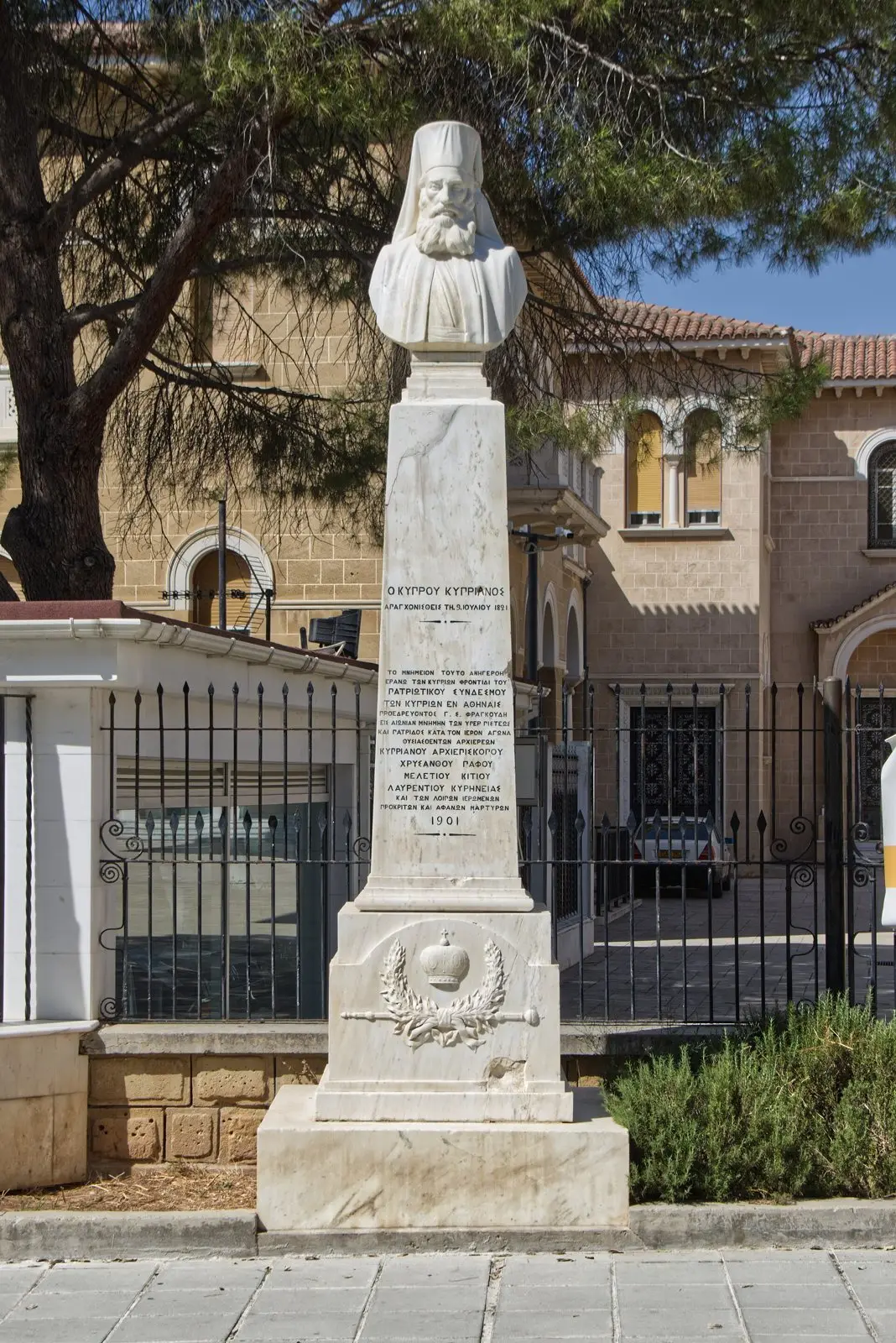
Kyprianos, born in Strovolos near Nicosia in 1756, became Archbishop of Cyprus in 1810. Like his predecessors he was both head of the Church and the main intermediary between Orthodox Cypriots and the Ottoman authorities. In 1818 he met representatives of the Filiki Etaireia, the secret society preparing a Greek uprising. Historians disagree on how far he committed himself. One account has him advising that Cyprus should support the cause with money and supplies rather than an armed revolt that would likely fail.
The Greek War of Independence began in March 1821, and leaflets calling for revolt soon appeared in Cyprus. The governor, Küçük Mehmed, who had arrived in 1820, sent Istanbul a list of hundreds of Greek Cypriots he considered disloyal, headed by the archbishop, the three other bishops and the abbots of the monasteries. Around 4,000 troops were brought in from Syria and the Christian population was ordered to hand over its weapons. Kyprianos urged his flock to comply, and he turned down offers of refuge from European consuls.
On 9 July 1821 the governor had the gates of Nicosia closed. Sources differ on whether Istanbul had approved the executions in advance. Kyprianos was hanged from a tree outside the governor’s palace, the former Lusignan royal palace. Bishops Chrysanthos of Paphos, Meletios of Kition and Lavrentios of Kyrenia were beheaded, along with many other notables. Killings and confiscations of property continued in the following days, both in Nicosia and elsewhere. Figures vary: contemporary accounts speak of hundreds of dead, and later totals of between about 470 and 490 are often cited. The French consul reported that the killing went on for weeks, even after an order from Istanbul on 20 July to stop the plundering.
To the governor, the church leaders were suspected rebels at a moment when the empire was fighting an uprising in Greece. Greek Cypriots remember the victims as martyrs. Kyprianos and the three bishops are buried at the Faneromeni Church in Nicosia, and the story was retold in a celebrated poem in Cypriot dialect by Vasilis Michaelides.
The executions deepened the sense among many Greek Cypriots that their future lay with Greece, an idea that would shape politics on the island for the next 150 years.