7 July 1426
Mamluk Invasion of Cyprus
A Mamluk army from Egypt defeats King Janus at Khirokitia, captures him and sacks Nicosia. Cyprus becomes a tributary of the sultan in Cairo.
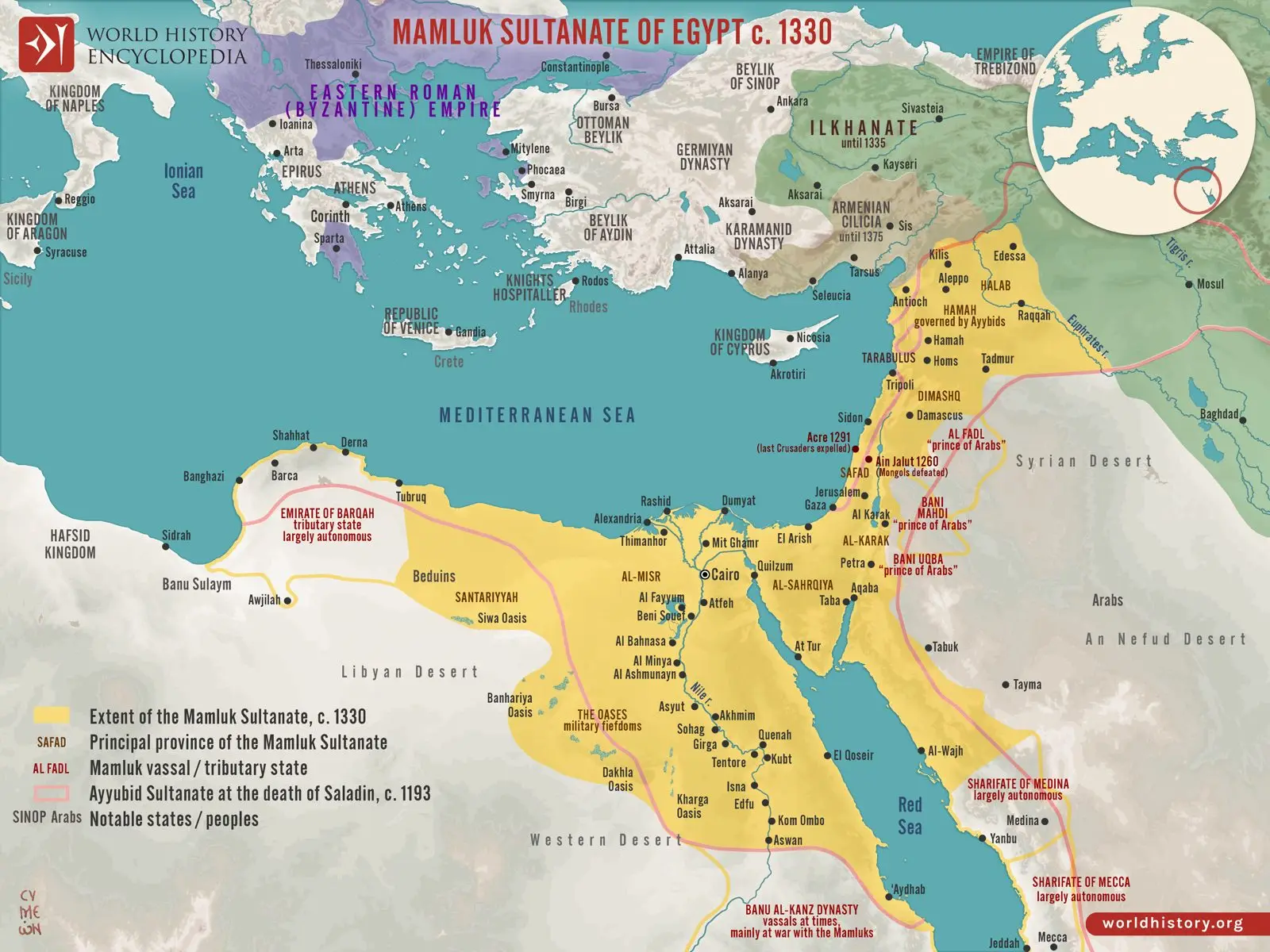
Relations between Lusignan Cyprus and the Mamluk Sultanate of Egypt had been hostile for a long time. In 1365 King Peter I had sacked Alexandria, and Cypriot ships continued to prey on Egyptian and Syrian shipping. In August 1422 Cypriots seized a ship in the harbour of Alexandria, and in May 1424 they took two ships from Damietta. Sultan Barsbay decided to put an end to it.
The reply came in stages. In September 1424 a small Mamluk force landed near Limassol, defeated the garrison and burned the town. In July 1425 a fleet of about 40 ships arrived off Famagusta, raided the countryside, beat a Cypriot fleet near Larnaca and sacked Limassol again, taking around a thousand captives home.
In 1426 Barsbay sent a much larger expedition, reported at about 100 ships, intended to bring the whole island under his control. It attacked Limassol on 1 July and destroyed its castle. On 7 July 1426 the Mamluk army met King Janus and his forces at Khirokitia (Choirokoitia), between Limassol and Larnaca. The Cypriot army was routed and the king himself was taken prisoner. The Mamluks went on to Nicosia, sacked part of the capital, and sailed for home on 18 July.
In Cairo, Janus was paraded through the streets with about a thousand other prisoners. He was released only after agreeing to a ransom of 200,000 dinars and an annual tribute, and he returned to Cyprus about ten months after the battle.
The defeat was a turning point for the Lusignan kingdom. With Famagusta still in Genoese hands and the royal treasury drained, Cyprus became a tributary of Egypt. The obligation outlived the dynasty: Venice continued paying tribute for the island to the Mamluks, and then to the Ottomans after they conquered Egypt in 1517. Within a generation, rival claimants to the Cypriot throne would be seeking the sultan’s backing to win power.