4 March 1964
UN Peacekeeping Force Deployed
The UN Security Council creates UNFICYP to prevent a recurrence of fighting in Cyprus. Meant to stay three months, the force is still there today.
The joint truce force that Britain, Greece and Turkey put together after the December 1963 fighting was only ever a stopgap. A conference in London in January 1964, with both Cypriot communities present, ended without agreement, and clashes continued at places such as Ayios Sozomenos, Limassol and Ktima (Paphos) through February and March. Turkey was preparing for possible military action, and the UN Secretary General, U Thant, had already sent a special representative to the island.
On 4 March 1964 the Security Council adopted Resolution 186 unanimously. It recommended a peacekeeping force, created with the consent of the Government of Cyprus, whose job was to use its best efforts “to prevent a recurrence of fighting” and to help restore law and order and normal conditions. The force was to stay for three months, paid for by the countries sending troops and the Cypriot government, with voluntary contributions on top. The resolution also asked the Secretary General to appoint a mediator, agreed with Cyprus, Greece, Turkey and Britain, to look for a settlement.
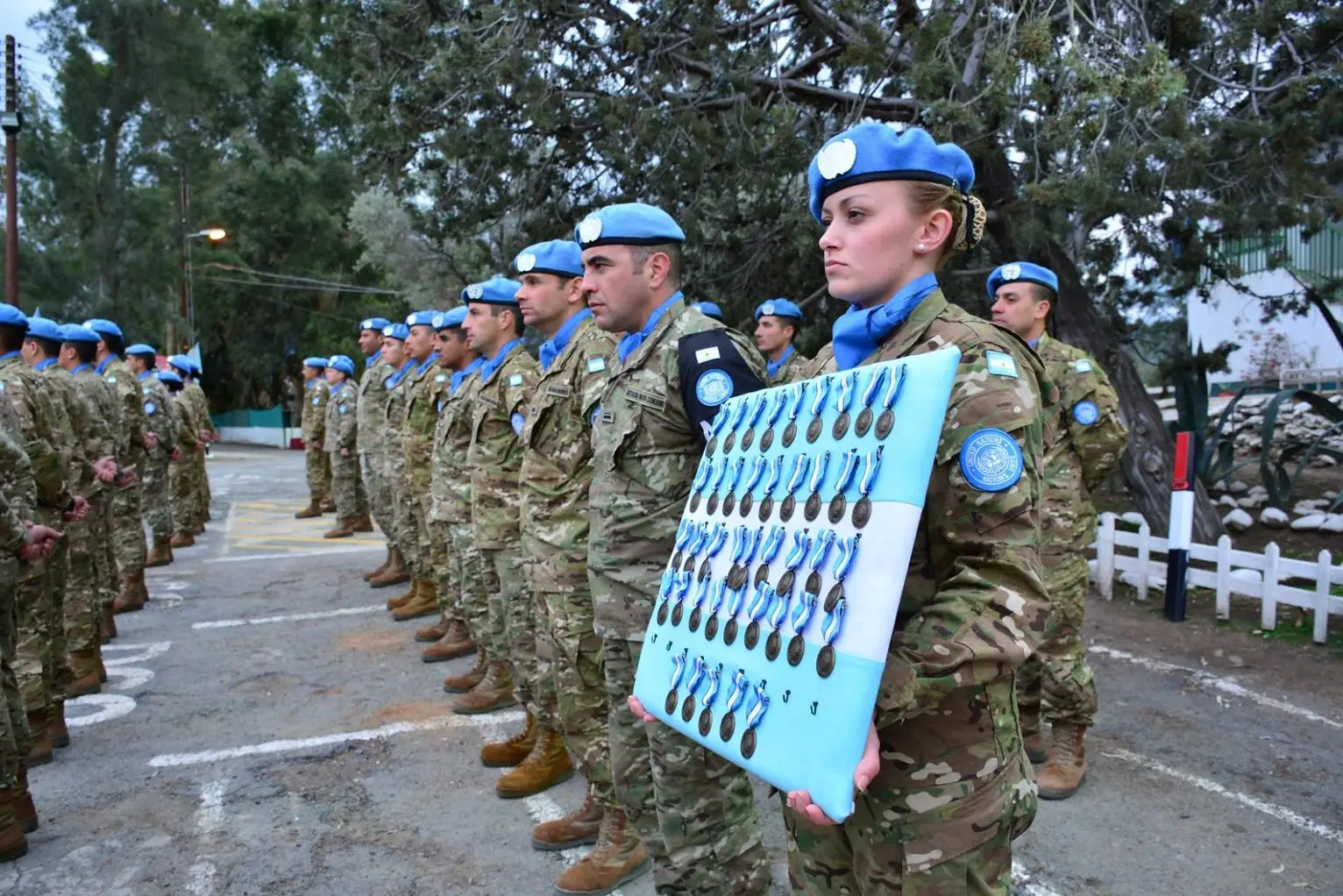
The United Nations Peacekeeping Force in Cyprus, UNFICYP, became operational on 27 March 1964, when the British led truce force was stood down. Its first commander was the Indian general Prem Singh Gyani, and early contingents came from countries including Austria, Canada, Denmark, Finland, Ireland and Sweden, alongside Britain. By June 1964 it had more than 6,000 troops on the island.
The peacekeepers could not prevent every clash, as fighting at Kokkina in August 1964 and at Kophinou in 1967 showed. But they gave both communities a neutral presence on the ground and a channel for local truces. The three month mandate was renewed again and again. After the events of 1974 the Security Council gave UNFICYP new tasks, including supervising the ceasefire lines and the buffer zone that runs across the island. Turkey has criticised the renewals and does not contribute directly, while the Republic of Cyprus and Greece cover part of the cost.