June to August 1958
Intercommunal Violence of 1958
A bomb in Nicosia in June 1958 sets off two months of killings between Greek and Turkish Cypriots, and families begin leaving mixed villages.
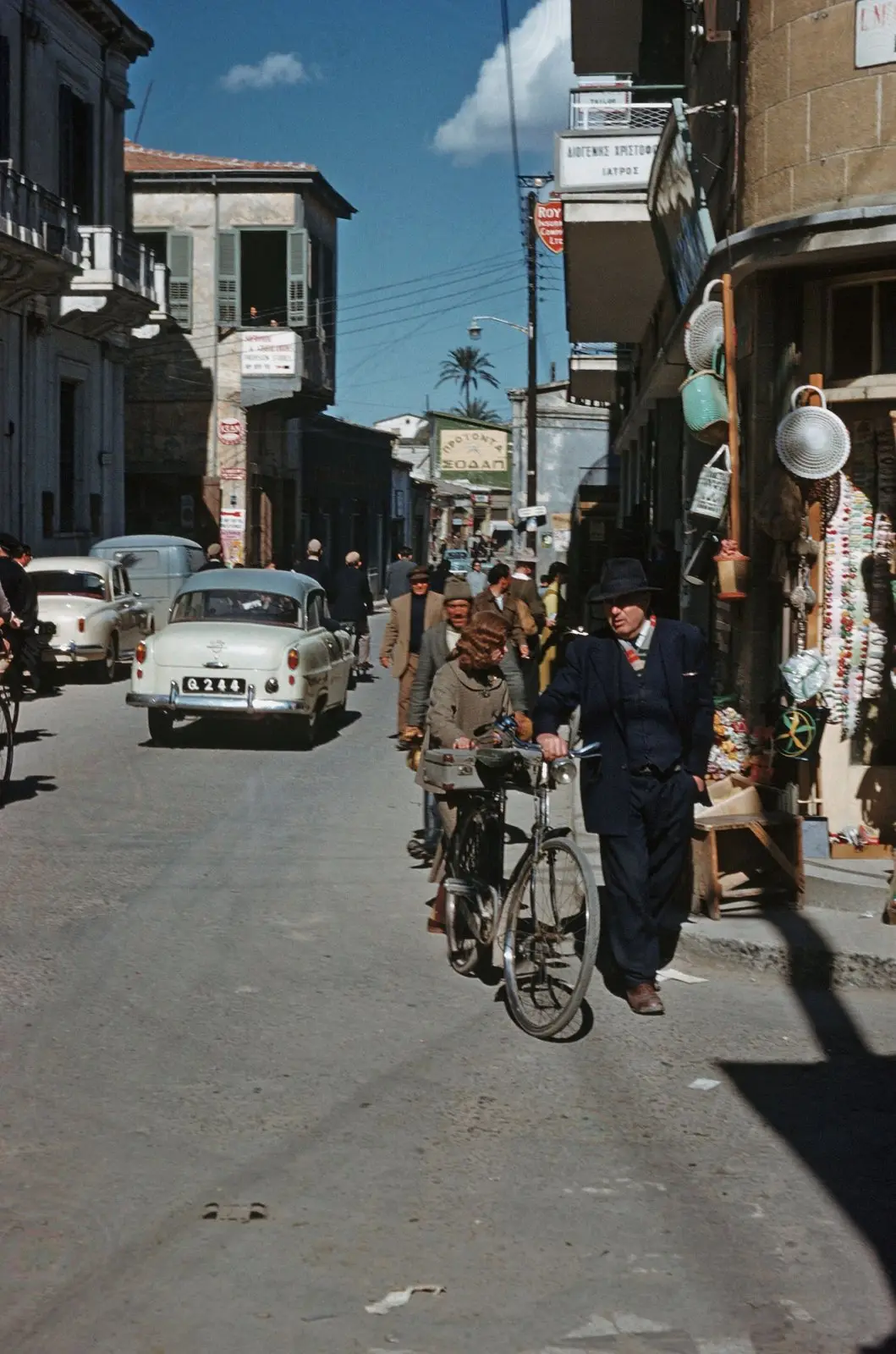
By 1958 the island was polarised. EOKA’s campaign for union with Greece was in its fourth year, and the newly formed TMT was pressing for partition. Britain’s use of Turkish Cypriot police against EOKA, and EOKA’s killing of some of those policemen, had already led to clashes in Nicosia in 1957. In early 1958 Turkish Cypriot demonstrations helped sink a British plan for limited self government, and in June London was about to unveil a new proposal, the Macmillan Plan.
On the evening of 7 June 1958 a bomb exploded outside the Turkish Press Office in Nicosia. Turkish Cypriot crowds blamed Greek Cypriots and attacked Greek Cypriot homes and shops in the city, and rioting spread to Larnaca, Limassol, Famagusta and other towns. British officials doubted the bombing was Greek inspired at the time. In 1984 Rauf Denktaş said in a television interview that the bomb had been placed by Turkish Cypriots to raise tension.
Killings followed on both sides through June and July. On 12 June eight Greek Cypriots were killed near the Turkish Cypriot village of Geunyeli (Gönyeli), in an attack blamed on local Turkish Cypriots. They were among a group arrested by British troops on suspicion of preparing an attack on a Turkish Cypriot village, and had been ordered to walk back to Kondemenos. Turkish Cypriots were killed in turn in attacks by Greek Cypriots. A US consular report of 6 August counted 157 people killed in the preceding 60 days from all forms of violence: 91 Greeks, 61 Turks and 5 British.
The violence changed the map of daily life. Families on both sides left villages where they were a minority, and in the towns the communities pulled apart. In July 1958 Turkish Cypriots in Nicosia, Limassol, Famagusta, Larnaca and Paphos set up their own municipal committees, a step given temporary legal footing in 1959.
The killing stopped in early August, when Grivas and then TMT announced a halt to operations, and the island saw its first day without violence since 7 June. Within months Greece and Turkey opened the talks that led to the Zurich and London Agreements of February 1959.
Sources and further reading
- US Department of State, Foreign Relations of the United States 1958 to 1960, Vol. X: Telegram from the Consulate in Nicosia, June 1958
- Costas and Rita Severis Foundation (CVAR): US consul's report, 6 August 1958
- Wikipedia: Cypriot intercommunal violence
- CyLaw: Turkish Municipal Committees (Temporary Provisions) Law 33 of 1959, preamble