c. 1200 BCE
Greek Mycenaean Settlement
As Bronze Age Greece collapses, Mycenaean Greeks settle in Cyprus, bringing the Greek language and founding kingdoms such as Salamis.
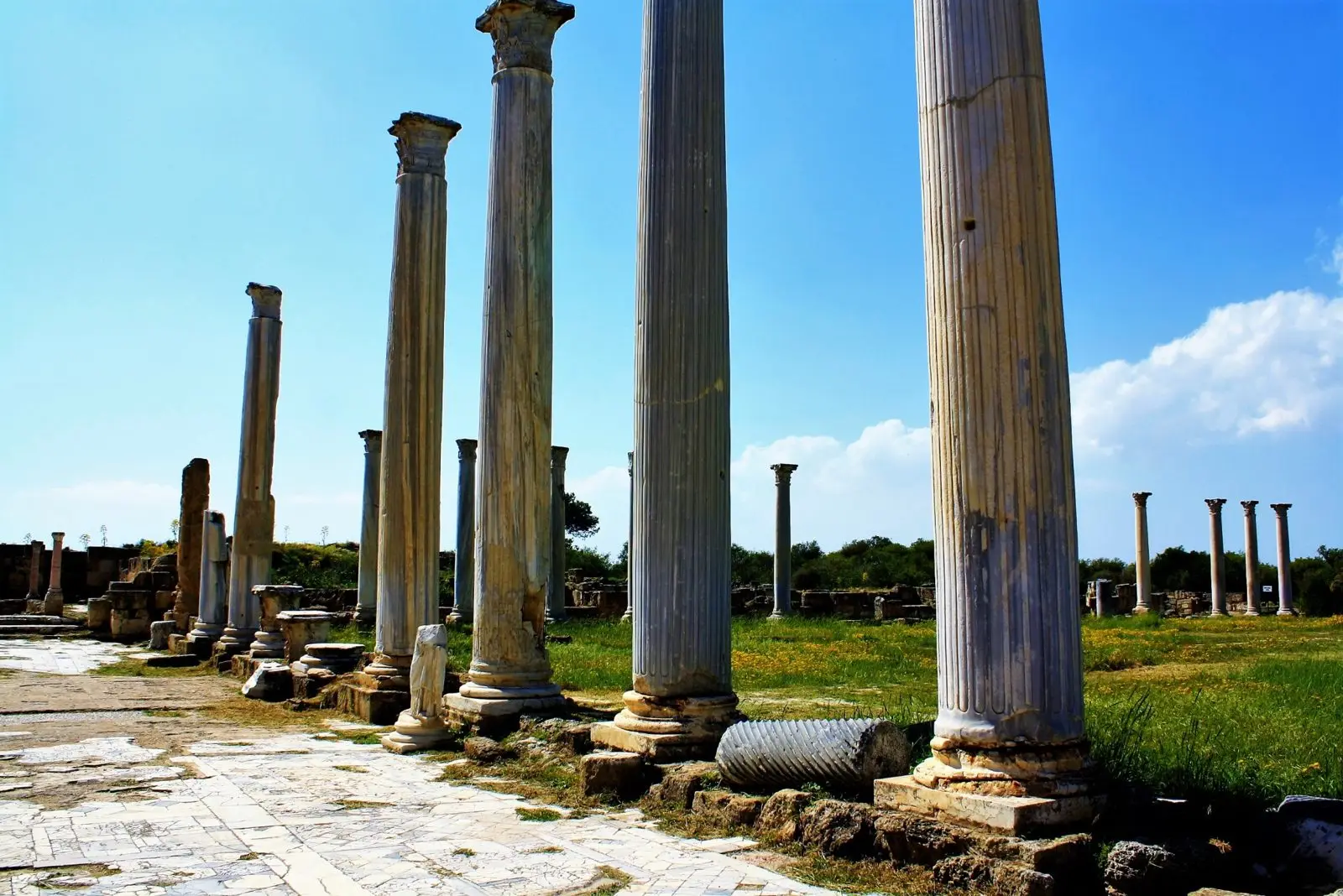
Cyprus knew the Mycenaean Greeks long before any of them came to stay. From about 1400 BCE Mycenaean pottery was being shipped to the island from mainland Greece, and the busy Late Bronze Age port of Enkomi, west of modern Famagusta, traded with the Aegean, the Levant and Egypt.
Around 1200 BCE the palace societies of Greece fell apart. This was part of a wider crisis across the eastern Mediterranean, and Cyprus felt it too. Enkomi, Kition and other towns show layers of destruction, which archaeologists link to raiders often called the Sea Peoples and to refugees from the Aegean. In the decades that followed, Greeks from the Peloponnese settled on the island, and a second wave of Greek arrivals followed around 1100 to 1050 BCE.
Later Greek writers dressed this movement in legend. Teucer, a hero of the Trojan War, was said to have founded Salamis, and Agapenor of Arcadia to have founded Paphos and its sanctuary of Aphrodite. The archaeology is more modest. The earliest finds at Salamis date to the 11th century BCE, when the town seems to have grown up as a replacement for Enkomi after its harbour was cut off from the sea.
The settlers brought a form of Greek closely related to the dialect of Arcadia, which linguists call Arcadocypriot. Unusually, Cypriots wrote it not in the Greek alphabet but in their own syllabary, which stayed in use until the 3rd century BCE. By the start of the 1st millennium BCE Greek had become the island’s main language. Britannica lists Greek kingdoms with capitals at Kourion (Curium), Paphos, Marion, Soli, Lapithos and Salamis.
Cyprus did not become wholly Greek, though. At Amathus an older population kept its own language, known as Eteocypriot, for a long time, and around 800 BCE Phoenicians from Tyre founded a colony at Kition, near modern Larnaca. The island that emerged was a patchwork of small kingdoms with mixed roots, and that pattern held until the end of the 4th century BCE.