709 BCE
Assyrian Overlordship
Cypriot kings submit to Sargon II of Assyria around 709 to 707 BCE. Assyria takes tribute and loyalty but never governs the island directly.
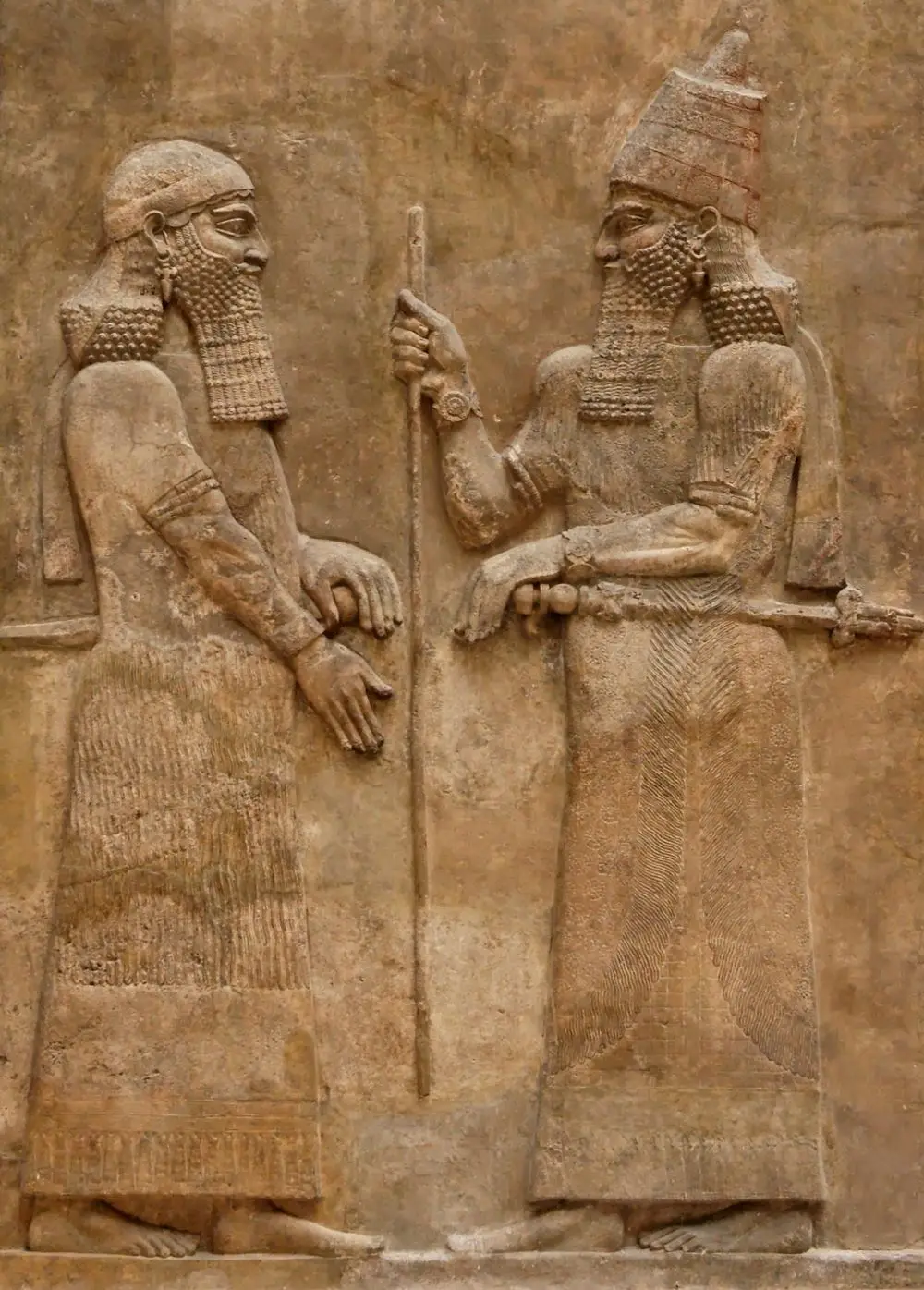
By the 8th century BCE Cyprus was a land of small kingdoms, some Greek speaking and some Phoenician. The strongest outside influence was Tyre, the Phoenician city on the Levantine coast, which treated several Cypriot rulers as its vassals. Meanwhile Assyria, based in what is now northern Iraq, was building the largest empire the Near East had yet seen.
Assyria had no navy and could not reach Cyprus on its own. Its involvement came through Tyre. Around 709 or 708 BCE the Tyrian king Šilṭa asked Sargon II (who reigned from 721 to 705 BCE) for help against Cypriot rulers who had rebelled against him. Assyrian inscriptions present the result as a royal campaign, but historians at University College London describe it as a war between Tyre and the Cypriot kingdoms, with Assyria lending troops and Tyrian ships carrying them across.
Afterwards a delegation of Cypriot kings went to Sargon, perhaps hoping that loyalty to a distant emperor would loosen Tyre’s grip on them. Sargon’s texts call the island Yadnana and speak of seven kings there. Around 707 BCE a basalt stele, just over two metres tall, was set up at Kition (modern Larnaca) to mark the occasion. It was found in the 1840s and is now in Berlin, with a replica in the Larnaca District Museum.
Assyria never ruled Cyprus directly. The island does not appear in Sargon’s state correspondence, and the kings kept their thrones. A generation later, around 673 to 672 BCE, King Esarhaddon listed ten Cypriot kings by name, ruling Idalion, Chytroi, Salamis, Paphos, Soloi, Kourion, Tamassos, Qarti hadasti, Ledrai and Marion. Seven of the names are Greek and three appear to be Phoenician. These kings helped supply building work at Nineveh and later helped muster Ashurbanipal’s army for Egypt, acting more like allies than subjects.
The older idea that Assyria conquered Cyprus and divided it into seven kingdoms does not match the evidence. What the records show is a loose overlordship, accepted by local rulers for their own reasons, which left the island’s kingdoms largely in charge of themselves.